.

Промоакции для игроков не только в шутерах — воспользуйся промокодом Vavada от наших партнеров и получи бонусы, которые подарят азарт и атмосферу, сравнимую с игровыми победами.

.

[GW2] Feature Shock and Collection

It’s been a few days since the second Feature Pack arrived from Guild Wars 2, and large chunks of the vocal community are in an uproar. My favorite description of the Feature Pack contents comes from Bog Otter’s delightful YouTube video, but for the written word head to Jeromai’s overview.

So there were some class changes. Mrs. Ravious loves her new Ranger Power! I haven’t had a chance to dabble with a dagger necro now with mini-cleave (pinky to mouth for effect). There’s some new WvW stuff, and I’m getting used to the new Trading Post updates. Yay for speed, Boo for default to list the item instead of auto-selling it. Double Yay for improved search and sell from my backpack power! Continue reading [GW2] Feature Shock and Collection

Idle Hands

Lately I have been fascinated with idle games, the way one might be with a wind-up toy or train set. You set things up and just watch it go.

AdVenture Capitalist remains strangely compelling, at least for a little while after they add updates. When you can quickly double your earnings, there is something to do, which is a strange thing to ask of an idle game.

After ProgressQuest was the trope-maker for idle games, later games have added variable degrees of interactivity. Upgrades and mini-games seem to be the most common, along with a bit of clicking, usually important at the very start but quickly overwhelmed by passive sources of advancement. Until recently, upgrades were the only interactivity in AdVenture Capitalist. Anti-Idle has a large idling component but also a variety of mini-games. Cookie Clicker is closer to AdVenture Capitalist but has rewards for watching and clicking the special cookies, along with some … unusualness in its late game. Candy Box and A Dark Room both have idle mechanics for advancement but significant game components.

I was originally surprised by offline advancement in AdVenture Capitalist, but that seems to be (becoming?) more common in idle games than I knew. Clicker Heroes and Idle Blacksmith both keep generating advancement while you’re away. Anti-Idle has an offline mode, but when last I played, you set it for a fixed duration like planting Farmville crops.

Lots of little wind-up toys. I cannot say that many of them have much gameplay value, but the steady accumulation of effortless illusory progress is almost hypnotic. Perhaps the strangest thing is seeing non-ironic idle games. ProgressQuest and Cow Clicker were commentary on types of games; new idle games mostly mean it.

: Zubon

Variability and Time Investment

Love Letter is a fun game. In my first game, I was eliminated before my first turn, and in just over half the rounds I have played, I have been knocked out before my second turn. In most games, I would not tolerate that degree of lack of player control, but the game creates a low level of investment in each round of play that makes it acceptable.

Hands of Love Letter are quick. A full four-player round takes a few minutes at most. If you are knocked out, oh well, watch how this round goes and you will be back in the game shortly. Sometimes not having a fair chance is fine when you get lots of chances that come quickly; slot machines rely on that perception (although those never give you a fair chance, so the whole gameplay there is “slowly losing” with some steps backwards on the path to bankruptcy).

In Love Letter, poor luck is constrained rather than cumulative. Many games give you many chances, but if you get a bad start, you will never catch up. Lots of classic card games like Poker are very good at this: unless you are playing no-limit, your luck in one hand has almost no effect on your chances in the next hand. How many “strategy” games have you seen decided (90+% probability) in the first quarter of the game when one person has an amazing turn while another has the worst possible luck for 15 seconds?

The cumulative effect is not making you suffer through the rest of the game because of a bad bit of luck. You should never “suffer through” your entertainment. I am usually enthusiastic about Eurogames’ rarely knocking out players before the end, but if the outcome is (90+%) known and you are just going through the motions for another hour, that is a wasted hour. Finish it so we can play another game. Keeping everyone in until the end is only a virtue if they have a chance at the end; surrender in the face of certain loss is honorable, not rage quitting.

And finally, Love Letter advertises that luck and guessing are involved. It does not pretend to be a strategy game while having its outcome determined by luck of the draw. It is surprising how much players can control the outcome despite the luck of the draw.

: Zubon

[TT] Love Letter

Love letter is another simple bluffing game, with a little less to offer than Coup but with greater simplicity and a more pleasant theme.

You are trying to get your love letter to the princess. The deck of 16 cards represents 8 roles around the castle, with higher numbers being closer to the princess. You get 1 card to start. Your gameplay each round is to draw 1 card, discard 1 card, and do whatever it says on the card you discarded. Whoever has the highest value card at the end (or is the last suitor standing) wins the round.

It really does not get much simpler than “draw 1, discard 1.” Depth comes from bluffing and guessing. For example, one card is the princess; if you discard it, you are out of the hand (the princess has burned your love letter). There is no reason to discard the princess … except that someone else might guess that you have the princess and force you to. The next most valuable card is her closest friend, who you must discard if you have a card close to it in value, such as the princess (or else you lose the hand) or the king (who is #3 in value anyway) … or you might discard her and hold onto a lower-value card to potentially set up a better position for the final card.

It is a lovely little game you can learn in less than a minute. “Draw one, discard one, try to have the highest number at the end. Everything else is on the cards, and there are only 8 different cards.” And go. Elegance in design.

: Zubon

[RR] D&D 5E: Proficiencies and An Economy of Actions

Two more general notes on simple changes that are likely to have widespread effects on the game.

First, one new mechanic replacing many is “proficiency bonus.” This takes the place of what has been many tables across the editions: THAC0, to hit bonuses, saving throw tables, spell DCs, proficiencies, and more. Those were all separate tables, sometimes separate tables by class, sometimes separate table by effect. For example, saving throws in second edition were divided by class, level, and what you are saving against; combine those three factors, look up the right cell on a chart, and there you have your base number to which to apply other modifiers. The same edition introduced included THAC0, which simplified several tables into one odd number, the number you needed to hit an enemy (modified by all these things), and it meant “To Hit Armor Class 0,” where 0 is not “no armor” but rather “pretty good armor,” as armor classes ranged from +10 to -10. In third edition, your number of attacks per round was a factor of your attack bonus, and each class worked from one of three attack bonus tables (another simplification over time).

Anyway, sweep all of that away for something simpler. If you are proficient in a weapon, you get a bonus. That applies to spellcasters’ focuses to, say a wizard’s want or a bard’s harp. The same bonus also applies to a rogue’s lockpicking tools and a ranger’s tracking. If you are proficient in a type of saving throw, you get the bonus. No separate tables for similar things, just the same bonus for every class, ranging from +2 at the start to +6 at the level cap. And then you apply all those modifiers.

Simplicity is a virtue. I’m concerned that giving spellcasters the same bonus as the fighters only helps them more, but I think they got nerfed on the other end to balance it out. Multiple attacks are now handled through a separate system. You can now have proficiency is just about anything, since that term has become a catch-all for “gets a level-based bonus.”

Second, the economy of actions has again been revised, or at least renamed. You get a move, an action, and potentially a bonus action. That is pretty close to fourth edition, and similar to third if you remove the possibility of a “whole round action.” What has been variously called a minor or swift action is now a “bonus” action, and you get one a turn from whatever menu you can acquire from your class, equipment, whatever. Maybe you are a two-weapon fighter and use the bonus action for off-hand attacks. Maybe you are a rogue and use the bonus action to pick a lock mid-combat, you cunning halfling.

A great merit here is the ability to give someone more cool options without surrendering too much to min-max. The limitations of action + bonus action is a balancer; while someone can acquire many great abilities, there is a built-in speed limit, so you get diversity rather than a master of all trades. Well, maybe you can master all trades, but you can only use so much at once. Preferably with a proficiency bonus and advantage on your side.

: Zubon
“From the Makers of”

Should we care about that title and who can usefully claim it?

Some argue that Sturgeon’s Revelation applies within creators’ works, not between creators. That is, if someone wrote one really good book, odds are that s/he will still only write one really good book; authors who are good authors rather than people who wrote a good book would be the 10% of Sturgeon’s 10%. And indeed, we see many successful things that lead to disappointing follow-ups. But most of us seem to apply the heuristic that the creators of something we like will probably create other things we like. Arkham Asylum was good, Arkham City was great.

But then there was Arkham Origins, which took some good from Arkham City and mixed in manure. “Your manuscript is both good and original; but the part that is good is not original, and the part that is original is not good.” Well, we blame that on having a different development team. But if you played Diablo II, there is a good chance you played Diablo III, which is a sequel from the same company but with an almost (?) complete turnover of key staff. Torchlight II might have had a better claim to being the sequel to Diablo II.

Let’s assume you place some weight on “from the makers of”; I cannot imagine all those movie trailers would use the phrase if no one did. Who should you care about? It was a running joke a few years back that developers were hiring janitors from Blizzard and slapping “from the makers of World of Warcraft!” on their homepages. Every company has turnover, and I don’t know if the people left are the ones who made the good parts of the game or the bad ones. I don’t know if the big name at the top really is a visionary leader or just happened to have the good luck of having a team member with a great idea. Recognizing great ideas is a skill, but once you’re successful, it’s easy to start thinking all your ideas are great ideas.

Some names I’ll trust, like Sid Meier. Development companies and series are increasingly losing my trust because [insert your favorite hated sequel here]. In our MMO world, you have the disconnect between the original developers and live team, such that the game you bought and the game two years later can be rather surprisingly different for the same game on the same engine.

Even if I were to never pre-order a title again and rely on reviews

[GW2] Mawdrey

Mawdrey is one of the chase items for the first half of Season 2 in Guild Wars 2. Unlike most of the other chase items, Mawdrey is not random-chance loot. It is quite the opposite. Mawdrey is a large treasure hunt, crafting spree, and tree destroying quest rolled in to one.

In The Dragon’s Reach: Part 1 sequence of story instances, players begin to receive items when each instance is completed. The first one appears in the story instance Uprooting the Iron Marches, which involves defending the charr region from planty mordrem attacks. One of the rewards is a Mysterious Seed with the instructions to “[p]lant in a Ley Line Infused Clay Pot to germinate”. The capitalization of course notes that another item will be needed, and they come uncompleted in the later story instances of the same chapter. Continue reading [GW2] Mawdrey

Useful Loading Screens 2

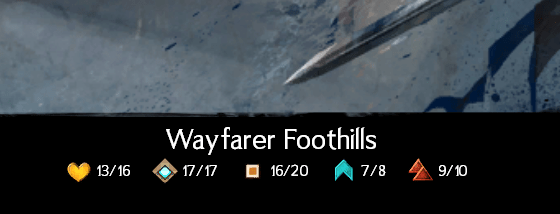
GW2 useful loading screen
Credit where it is due, and I am surprised I did not note it at the time: Guild Wars 2 includes potentially useful information on its loading screens. It charts your progress towards 100% zone completion. The theme park says, “You have ridden 13/16 rides from this zone on this character and seen 9/10 photo spots.” I can still dream of the more exciting tips from my old post, but this is more than most games try to offer.

: Zubon